
We’re a little late on this, but at least it’s still January! Nearly every year since we’ve started this blog, we’ve noted the top five viewed posts of the year, regardless of when we wrote it. This is not total overall views of the post, but total views for the calendar year, in this case, 2025. It is always interesting to us, at least, to see which posts get the most views. Here they are in reverse order:
5. Romans 13 and Government Restrictions. This was written about two months into the Covid lockdowns in 2020, where significant debate and argument was being devoted to how Christians (and the entire world, really) should relate to the government, especially when it was instructing houses of worship to close and provide digital worship services. Drawing on Stanley Porter’s Romans commentary, I noted that Paul’s command to obey government leaders was tempered by those authorities being “superior” authorities, who did good for their people, rather than bad. Although I may rethink my conclusions in the post at this time (hindsight is always 20/20, isn’t it?), the post calls for Christians not to just obey the government blindly—even if there is no sin boundaries being crossed.

4. Good Scholar, Bad Scholar—Which One Are We? This was a blog written over 10 years ago, by our then co-blogger Hughson Ong. He reflected on the meaning of the word “scholar,” including both old and new notions of what it means to be a scholar, especially a good scholar. He notes that, among other things, being a good scholar means (1) not simply rehashing old or existing ideas but bringing something new to the discussion, (2) having a robust theoretical framework to work from, rather than just one’s own personal preferences or prejudices, (3) suspending judgment when a new idea is presented and evaluating the argumentation, (4) giving appropriate credit where credit is due, and (5) having a healthy sense of inadequacy, that one has not arrived at final knowledge but continues to grow and progress.
3. Thoughts about the NA29 and UBSGNT6. This post was written by our friend and colleague, John J.H. Lee, who currently serves as Managing Editor of MDC Press at McMaster Divinity College. Written in April 2019, when the announcements of these two editions were made, Lee reflected at the time on some concerns about these updated editions, namely regarding the ECM’s influence upon textual variant decisions, as well as the influence of the CBGM on the updates. Although at the time of this post the GNT Reader’s Edition and Hugh Houghton’s Textual Commentary are out, we will have to wait a few more months for those editions to be available.
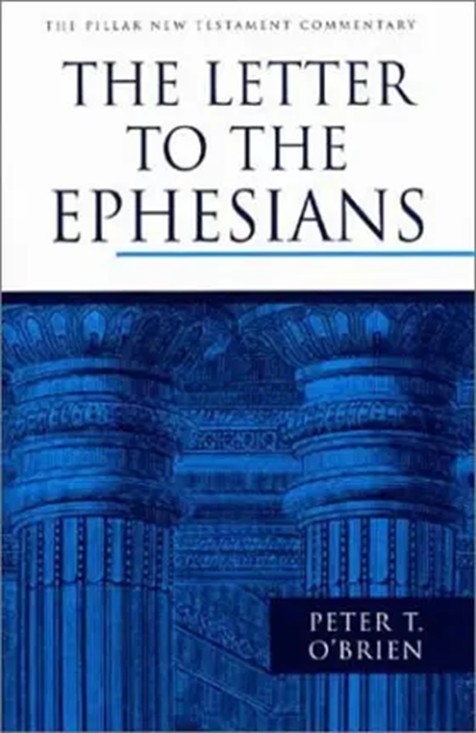
2. The Shocking News of Peter O’Brien and Plagiarism. This post continues to draw large crowds to our blog, year after year. Stan wrote this post nearly 10 years ago (September 2016), when news of plagiarism in Peter O’Brien’s commentaries was plastered all over the World Wide Web, and publishers including Eerdmans offered refunds for his commentaries. Stan’s point—which over the years has seemed to be misunderstood—was not that plagiarism was acceptable and encouraged, but rather that conventional commentary writing these days has become no more than “compendia of other people’s knowledge.” He further states that “we have perverted the scholarly processes so that readers and book buyers, including scholars but also students and even lay people, have come to believe that the pinnacle of scholarship is the commentary. What began as a helpful guide to offer insight into the intricate workings of the text so that serious scholarship could then be done as a result has come to be viewed as the final word in scholarship itself, a compendium of the accumulated knowledge of the ages and especially of other commentators.” Note that Stan is not against commentary writing per se, as he has written two of them himself, one on Romans and the other on the Pastoral Epistles, but that his critique is of the state of modern commentary writing, using the occasion of O’Brien to reiterate what he has stated elsewhere.
1. A Permanent Text of the ESV Bible? They Must Be Joking. The most viewed post for 2025 was this post which was written about 10 years ago as well (September 2016). This was our response to the ESV/Crossway committee announcing—but soon commendably retracting—their intent to solidify the ESV as a Permanent Text. As any reader can see from the comments on the post, our response had a mix of responses. Our critiques included, among others, a seeming misunderstanding of translation approaches and how languages work. We admit to using some strong language back then, as we thought it merited such language. However, as the committee has since retracted their decision (whether or not it was related to this post, we don’t know), we commend them for making a good second decision in this matter. If we did have any voice in that, we appreciate their taking our comments seriously.
Honorable mention goes to Why Is It Called “Passion” Week? Etymology to the Rescue. This was a post written in April 2019 to explain why we call it Passion Week. It isn’t because Jesus was passionate about his death, but etymology shows us that the English word “passion” has origins in the Latin passio, which meant suffering or enduring.
We appreciate our readers and engagers, and encourage them to continue reading our blog and to share any content they deem helpful in thinking through areas in biblical studies, church and culture, and leadership. As we reflect on the most viewed posts of 2025, we realize that most of them were written a number of years ago; and we are reminded that we need to continue to post relevant and engaging posts for 2026!
— David I. Yoon
 DOMAIN THIRTY-THREE