
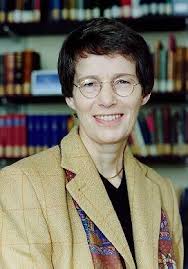
Barbara Aland (née Ehlers) was born on April 12, 1937, in Hamburg, Germany, during the time of the Third Reich of Adolf Hitler, and died on November 10, 2024, at the age of 87. She is best known for being the coeditor of the Novum Testamentum Graece since 1979, director of the Institut für Neutestamentliche Textforschung (Institute for New Testmanet Textual Research; INTF) in Münster, and a New Testament textual critic alongside her husband Kurt Aland (1915–1994).
Barbara grew up in post–World War II Germany, which no doubt had an influence on her life and scholarship. She received her education in Germany, at universities in Frankfurt, Marburg, and Kiel. She earned the PhD equivalent from the University of Frankfurt in 1964, with a dissertation titled “Eine vorplatonische Deutung des sokratischen Eros: Der Dialog Aspasia des Sokratikers Aischines” (A Pre-Platonic Interpretation of Socratic Eros: The Dialogue of Aspasia of the Socratic Aeschines). She habilitated at the University of Göttingen, writing on Bardesanes of Edessa, the Syrian gnostic. Her first academic post was at the University of Münster in 1972, where she remained until her retirement in 2002, achieving the rank of professor of church history and New Testament. Her scholarly interests were broad from early on, beginning with Greek philosophy and Gnosticism and then moving to the Greek text of the New Testament. In 1972, she married Kurt Aland, who had been professor at Münster since 1958 and founder and director of the INTF since 1959. Kurt was given an opportunity to teach at the University of Chicago in 1960, but he declined the invitation and remained at Münster until his death in 1994. Had he taken that post, who knows if he would have ever married Barbara and if the INTF would have continued the way it did? Perhaps the work and trajectory of INTF was a primary reason Kurt declined the invitation.
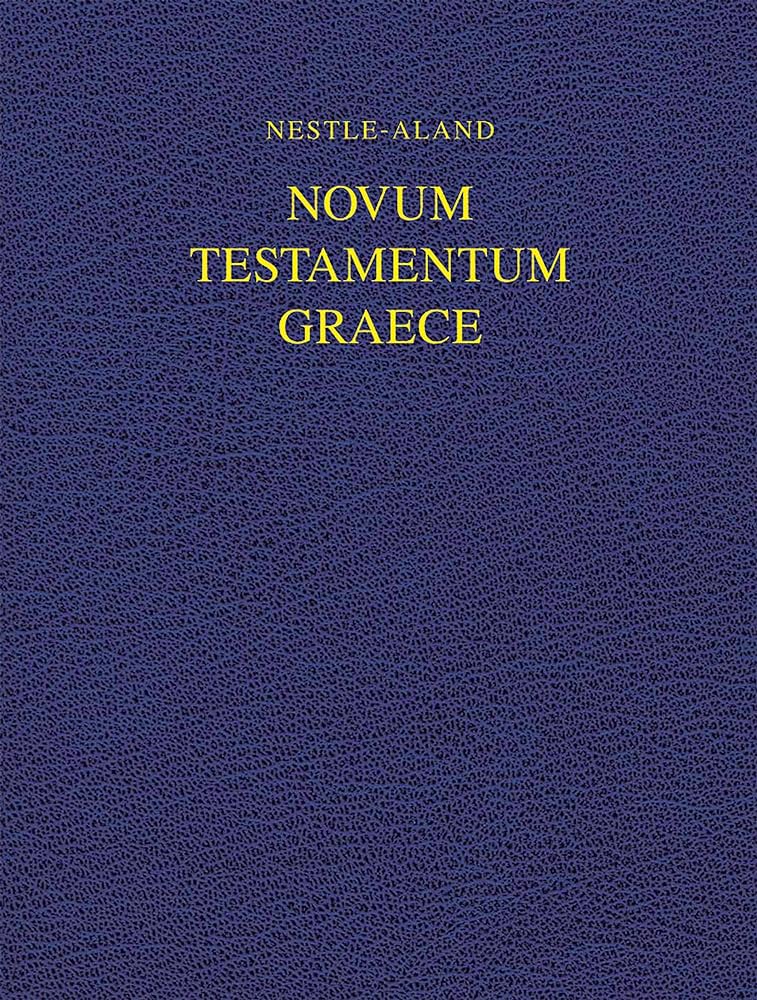
Barbara took over as director of the INTF and the associated Bible Museum of Münster from 1983 to 2004, with Holger Strutwolf as her successor. The Bible Museum, which was founded in 1979 by Kurt, was the first and only (at that time) Bible museum in the world. Two of the significant products of the INTF are the Novum Testamentum Graece, commonly known as Nestle-Aland (currently in its 28th edition), and The Greek New Testament of the United Bible Society (UBSGNT, currently in its 5th edition). These texts, while they claimed to include reference to the latest textual discoveries, including especially the papyri, were firmly within the eclectic text tradition inaugurated by Westcott and Hort in the nineteenth century. As a result, those who emphasized the papyri and those who argued for the Byzantine text found plenty of fault with Aland’s suppositions. This became evident in a conference held at McMaster Divinity College in 2005 where Barbara defended her approach in relation to other text-critical theories. The papers from this conference, including Barbara’s, were published in Translating the New Testament, ed. Stanley E. Porter and Mark J. Boda (Eerdmans, 2009).
Barbara was also involved in the publications of the Novum Testamentum Latine and the 6th edition of Griechisch-deutsches Wörterbuch zu den Schriften des Neuen Testaments und der frühchristlichen Literatur by Walter Bauer. One major project of the INTF is the Editio Critica Maior (ECM), a critical edition of the Greek New Testament using all the extant Greek manuscripts, translations, and witnesses from the first 1,000 years. Barbara was involved in the first several volumes of the ECM on Acts and the Catholic Epistles.
While we have many criticisms regarding the methodology of the ECM, specifically its use of the Coherence Based Genealogical Method (CBGM), we can certainly appreciate the work of Barbara Aland in the field of New Testament textual criticism. (We will have a fuller evaluation of the CBGM in our forthcoming book on New Testament textual criticism, co-authored with our colleague and friend, Chris S. Stevens.) Nevertheless, the Alands certainly left an indelible mark on the study of the Greek New Testament, as they are responsible for two of the most used editions of the Greek New Testament today. We would like to honor the life and career of Barbara Aland, who made a rare impact on our guild, one that few scholars have made.
— David I. Yoon and Stanley E. Porter
(Some of the biography is taken from Margaret Mowczko’s blog and Eve-Marie Becker’s tribute.)
 DOMAIN THIRTY-THREE