
What does it mean to be a Christian institution of higher education? More to the point, what does it mean, especially in this day and age, to be a Christian university? Or any kind of university, for that matter? This is a question that we are increasingly faced with. Unfortunately, it appears that at least some Christian higher educational institutions that call themselves universities are failing the test of what it means, and this raises serious questions about the future of Christian higher education itself.
We recently heard with great regret that Cornerstone University in Grand Rapids, Michigan, closed down their humanities and arts departments, letting go of the full-time faculty in those departments. This article isn’t a comment on this particular institution—although we certainly have our opinions, and so should you—but a response to this unfortunate news. This incident serves as a springboard to discuss the challenges and difficulties that higher education institutions, especially Christian universities, are facing and some grave mistakes that we think are being made that jeopardize the future of (Christian) higher education.

Our comments combine two different sets of experiences and perspectives: one, from the perspective of a senior administrator who has served as president of a major evangelical seminary for nearly a quarter of a century and before that as a faculty member and administrator in both Christian and non-Christian universities in three countries on two continents, and the other, an early career educator who has been a student at three different Christian institutions of higher learning and has taught at two. These comments are not designed to minimize the struggles that many institutions face, as there are many other factors involved in decisions like the one Cornerstone recently made, factors that we, the general public, may or may not be privy to. Our goal is not to condemn these institutions, but to help think through how we can steer Christian higher education towards fulfilling its God-given goal(s). These comments are to help recalibrate ourselves as to what we should or should not be doing as educators and administrators. And we believe that in doing so, we will not just survive but fulfill the vision of what Christian higher education should be.
First, we start with the big picture of the purpose of higher education. Is it to get a “good job” upon graduation? Is it for notoriety and prestige in society? Is it to gain knowledge about a particular field and be recognized as an expert? Many seem to think so, including the US Department of Education that mandates that institutions provide statistics such as the income of graduates on institutional websites, a dubious criterion at best and insidious at worst.

Gilbert Ryle, in his well-known essay, “Teaching and Training,” argues for the significant difference between teaching and teaching to. The role of a teacher—and by extension an educational institution—is not simply to impart information and have the student regurgitate this information, but to teach students how to become able and apt to find their own solutions to problems—to think for oneself. So institutions of higher learning should have as their overarching goal to produce critically discerning and capable students who are able to think for themselves and sort through problems thoughtfully, so that they can be productive and contributing members of society. This is quite different from trades schools, where the goal is to produce students who become competent in a particular trade so as to be able to get a job in that field. And we are grateful that we have competent plumbers and mechanics and electricians in our society. But while every academic department can contribute to this overarching goal of developing educated members of society, some departments, as in the arts and humanities, more directly address this goal of teaching to and thinking how to.
Second, the value of the arts and humanities, including fields like literature, history, philosophy, languages, music, fine arts, and so on, cannot be understated in developing a society of intellectual, creative, thoughtful, and productive people. Societies that thrive and contribute to the betterment of the world are composed of people who use their minds to create beauty in its various iterations and forms. Many administrators realize this, and yet some still make unfortunate decisions to cut these programs.
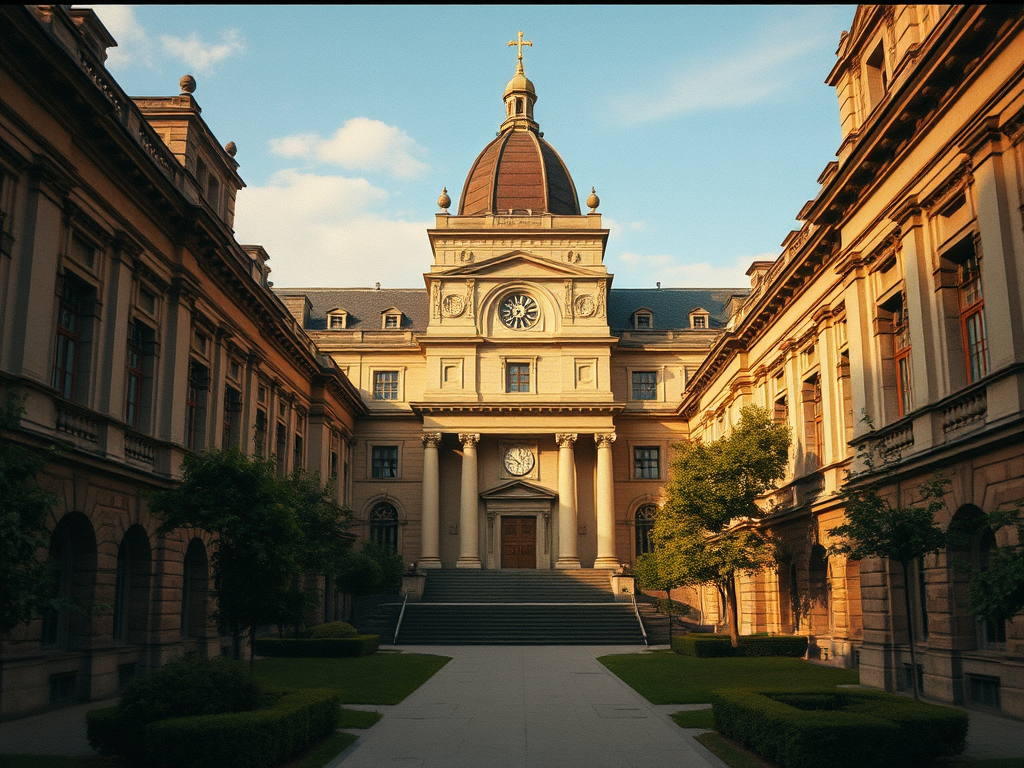
The basis of the university system, and Christian universities with it, is the medieval trivium and quadrivium. These consist of grammar, logic, and rhetoric as the trivium, and arithmetic, astronomy, music, and geometry as the quadrivium. They form a continuum by which the learner masters how to think about the world. In other words, the arts and humanities and fundamental sciences (not applied sciences, such as engineering or even medicine) are not only the basis of the modern university system but the basis of all human knowledge. One must wonder aloud whether an institution—Christian or otherwise, but especially Christian institutions—can call themselves universities if they do not actively support and promote these subjects as fundamental to student learning.
Third, most Christian institutions have as their mission statement some sort of desire to engage culture with the Christian worldview, however the wording is presented. Church and culture, the Bible and culture, Christian worldview and culture. However, what composes culture? Is it not primarily the humans in the culture who reflect the culture? How can a Christian institution properly and effectively engage in culture when there are no experts (the professors who teach literature, arts, music, etc.) in such an institution? We find instead business programs and applied subjects, perhaps better taught as trades within technical schools rather than universities.
Fourth, just as there is a method or framework in how we do anything, there is a method for doing higher education. There are various methods, implicit or explicit, in doing things like running a business, operating a church, or even studying for an exam (or writing a paper). One detrimental method is pragmatism. Pragmatism has not only taken over higher education, including Christian higher education, but it has taken over the church as well. For pragmatism, truth is defined by what works and what brings about certain outcomes, such as larger numbers of students, regardless of subject area, or more congregants, regardless of what they are taught from the pulpit (as seeker churches have experienced). We saw, especially in the 1990s and 2000s, that many churches operated from a pragmatic framework. Entertainment brought in more people, so the focus was on entertainment. But looking back at pragmatism in the church, we see it failed and continues to fail, as mega-churches such as Willow Creek have admitted decades later. And Christian institutions of higher learning that operate based on pragmatism (whether knowingly or unknowingly) are failing too.

This relates to our final point. The idea of an institution of higher learning operating like a business is a delicate one. There is the reality that, for an institution to survive, there must be a healthy budget. Many schools depend upon student enrollment in order to meet their budget, while only a few Christian institutions have a sufficient endowment to survive. However, while some businesses may survive by customer satisfaction (e.g., Burger King’s old slogan, have it your way), we would argue that the most successful businesses are those that have a clear vision and mission and provide a high-quality product that aligns with that vision and mission, rather than trying to cater to what students might gravitate toward. Treating students and prospective students like customers or prospective customers would be an example of pragmatism. But pragmatism, we believe, is a poor method for doing higher education, and for those Christian universities that have a mission statement along the lines of educating future Christian leaders to impact society and the world, pragmatism simply will not work. Cutting humanities departments only serves to kill the mission of the institution, even if it attracts larger numbers of students in other programs.
We realize, however, that the decision to close one or more departments of a university or college is not an easy one—neither is the decision to let go of faculty, especially those who are beloved by many students. This post is not an attack of any particular institution, as we realize many complicated factors are involved in such decisions, finances notwithstanding. However, if we are to raise the standard for Christian education and restore the notion of a truly Christian university, with any hope of revitalizing student enrollment, Christian institutions must not forget their primary purpose, their vision and mission, to produce capable, intelligent, thoughtful, creative, and contributing members of society. And they would do well to sell prospective students on the benefits of becoming capable, intelligent, thoughtful, creative, and contributing members of society. We are still optimistic that these are the types of people in society who get the jobs, who are offered the promotions, and who receive opportunities. Graduates of such institutions can look back at their time in school and appreciate how much they grew as individuals because their institution did what they were supposed to do.
—Stanley E. Porter and David I. Yoon
 DOMAIN THIRTY-THREE